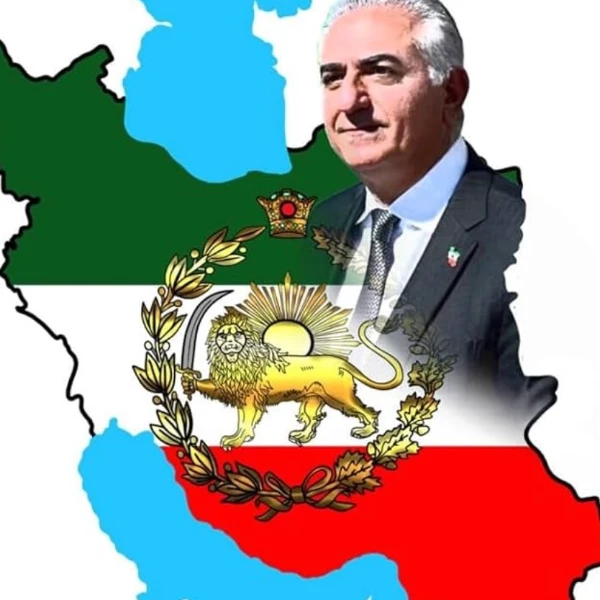
Short Answer

The model sees potential mispricing regarding Reza Pahlavi leading Iran in 2026, with 0.4% model probability versus 14.5% market probability. This suggests the market significantly overestimates his chances.

1. Executive Verdict

  • Iranian military intelligence indicates a widening internal command schism.
  • A leaked memo outlines a strategy to discredit Reza Pahlavi.
  • Supreme Leader Khamenei's declining health is a critical succession factor.
  • Escalating protests and economic crisis could bolster Pahlavi's prospects.
  • Key Iranian opposition groups hold diverse stances on Pahlavi's plan.

Who Wins and Why

Outcome Market Model Why
Reza Pahlavi 14% 0.4% Reza Pahlavi's proactive international diplomatic and diaspora mobilization efforts (Grade B evidence) have materially increased his strategic relevance, but the Iranian regime's direct countermeasure of a nationwide internet shutdown severely weakens the causal link between these external actions and the necessary internal mobilization, thus capping the probability's upside.

Current Context

Reza Pahlavi actively seeks international support amidst regime efforts to discredit him. He has been invited to the Munich Security Conference and is expected to speak at demonstrations there on February 14, a date he designated as a "Global Day of Action" for the "Lion and Sun" uprising, urging Iranians abroad to demonstrate in cities like Munich, Los Angeles, and Toronto to pressure the international community for support. The Iranian regime has concurrently launched an online campaign to undermine Pahlavi, portraying him as a Western-backed instrument, amidst a three-week internet shutdown in Iran aimed at preventing communication among protesters. Despite these efforts, an opinion piece suggests many Iranians trust Reza Pahlavi, with "Javid Shah" becoming a prominent protest slogan. Pahlavi has stated he is actively preparing to return to Iran even before the current regime falls. A leaked memo from the IRGC-linked Tasnim News Agency on February 2 revealed a strategy to discredit Pahlavi by denying his social base and depicting him as a "puppet".
Debates persist regarding Pahlavi's popular support, legitimacy, and unity potential. The extent of Reza Pahlavi's actual popularity within Iran remains a significant discussion point, with varying reports on whether protest chants reflect widespread organic support or are more concentrated within the diaspora. Middle East expert Trita Parsi stated on January 28 that there is no credible evidence of widespread popularity for Pahlavi among ordinary Iranians, suggesting diaspora support is often rooted in nostalgia and a preference over the current regime, rather than strong organic backing; he also notes significant opposition to Pahlavi within the diaspora. Political analyst Rouhollah Rahimpour described the regime's actions, following the leaked IRGC memo on February 2, as a "narrative war" designed to prevent a connection between protesters inside Iran and Pahlavi, thereby hindering the formation of unified leadership. Other commentators present a range of opinions, from seeing Pahlavi as the "best alternative" to viewing him as irrelevant in Iran, a "relic of the past" whose hereditary claims hinder democratic progress, or an "opportunist". Common questions and concerns center on his legitimacy given his hereditary claim and long exile, whether his support is genuine within Iran or largely a diaspora phenomenon, and if he can unite the diverse Iranian opposition or prove divisive. Key data points people are looking for include details of his proposed transitional government, such as a 100-day recovery roadmap, a new constitution, and a referendum to determine Iran's future system.
Upcoming events will test Pahlavi's movement and underscore transition practicalities. February 11, 2026, marks the 47th anniversary of the Islamic Republic's rule in Iran. This will be followed by Reza Pahlavi's designated "Global Day of Action" on February 14, with anticipated large demonstrations in cities like Munich, Los Angeles, and Toronto, coinciding with the Munich Security Conference. Information on the scale of ongoing protests, the regime's repressive measures, internet shutdowns, and the number of casualties (with estimates ranging from thousands to over 40,000 during specific periods) is actively sought. International engagement, including the level and nature of support for Pahlavi and the Iranian opposition, such as calls for sanctions, internet access (Starlink), and targeted actions against the IRGC, are also key data points. Concerns exist regarding the feasibility and logistics of a transition of power, including maintaining stability, ensuring security, and establishing a new government, particularly given Pahlavi's calls for actions like "surgical strikes" against the IRGC, which some Iranians fear could lead to instability or civil war.

2. Market Behavior & Price Dynamics

Historical Price (Probability)

Outcome probability
Date
This prediction market has experienced a dramatic and sustained downward trend, indicative of a catastrophic collapse in trader confidence. The market opened with extreme optimism, pricing the probability of Reza Pahlavi leading Iran at a near-certain 99.0%. However, this sentiment was shattered by two critical events in early January 2026. The first and most significant shock occurred on January 10, when the price plummeted 54.0 percentage points to 45.0%. This crash was a direct market reaction to the Iranian regime's intensified crackdown on protests and a concurrent internet blackout, which traders likely interpreted as a major blow to the opposition's organizational capacity. This was immediately followed by a 19.0 percentage point drop on January 12, as news emerged that Pahlavi's perceived popular support was partly inflated by artificial social media activity, further eroding the fundamental bull case.
Following these major sell-offs, the price has found a potential support level in the mid-teens, currently trading at 16.0%. The substantial total volume of over 213,000 contracts suggests significant market interest and liquidity, with the sharp price drops in January likely occurring on heavy volume, signaling strong conviction from sellers. The chart's narrative is one of a complete sentiment reversal. Initial expectations have been overwhelmed by the realities of the regime's internal control and revelations that undermined Pahlavi's perceived strength. Despite his ongoing international efforts to garner support, the market currently assigns a very low probability to him leading Iran by 2026, suggesting that traders believe the obstacles on the ground are far more significant than his activities abroad.

3. Significant Price Movements

Notable price changes detected in the chart, along with research into what caused each movement.

📉 January 12, 2026: 19.0pp drop

Price decreased from 43.0% to 24.0%

Outcome: Reza Pahlavi

What happened: The primary driver of the 19.0 percentage point drop in "Will Reza Pahlavi lead Iran in 2026?" on January 12, 2026, was likely an emerging understanding that a significant portion of his perceived popular support was artificially generated on social media. Although a detailed French investigation into a "Persian bot war" exposing thousands of fake accounts on Platform X promoting Reza Pahlavi was reported on January 31, 2026, the underlying activity of these coordinated digital operations, which produced billions of interactions and pushed hashtags like "KingRezaPahlavi," was ongoing and would have influenced market sentiment around January 12th. This social media activity, largely from a network of suspected fake accounts rather than genuine grassroots support, appeared to lead the price move by diminishing the perceived legitimacy and breadth of his popular appeal. Additionally, traditional news sources on or around January 12, 2026, reported on Reza Pahlavi's unsuccessful attempts in February 2025 to convince Western leaders to support the overthrow of the Islamic Republic, with his invitations to key events rejected and difficulties in arranging meetings with senior government officials. This news, appearing to coincide with the price drop, further undermined confidence in his prospects for leadership by highlighting a lack of crucial international backing. Concurrently, the Iranian government's escalating and largely successful crackdown on nationwide protests, which Pahlavi had encouraged, with reports of thousands killed and authorities reasserting control by January 19, 2026, also coincided with the market movement, significantly reducing the perceived likelihood of a popular uprising leading to his leadership. Given the prioritization of social media activity, the unraveling perception of manufactured online support for Reza Pahlavi was a primary driver, with the traditional news regarding his lack of Western support and the government's successful suppression of protests acting as significant contributing accelerants.

📉 January 10, 2026: 54.0pp drop

Price decreased from 99.0% to 45.0%

Outcome: Reza Pahlavi

What happened: The 54.0 percentage point drop in the "Will Reza Pahlavi lead Iran in 2026?" prediction market on January 10, 2026, was primarily driven by the Iranian regime's intensified crackdown on widespread protests and a subsequent nationwide internet blackout. While Reza Pahlavi actively used X (Twitter) on January 10 to call for continued protests and urged US President Donald Trump to intervene, the simultaneous and severe state repression, including a communications shutdown, severely hampered the protest movement he championed. This forceful government response, which labeled protesters as "terrorists" and threatened severe punishment, significantly reduced the perceived likelihood of a successful leadership transition to Pahlavi that would gain official US recognition, which was the market's resolution condition. Therefore, social media activity was a contributing accelerant to the protests, but the regime's decisive counter-action was the primary driver of the market's decline.

4. Market Data

View on Kalshi →

Contract Snapshot

This market resolves to "Yes" if Reza Pahlavi is appointed, elected, named, designated, or succeeds to the position as the head of state or government of Iran before January 1, 2027. If this event does not occur by then, the market resolves to "No." The market opened on January 10, 2026, and will close early if the event occurs, otherwise it closes by January 1, 2027, at 10:00 AM EST, with payouts projected 30 minutes after closing.

Available Contracts

Market options and current pricing

Outcome bucket Yes (price) No (price) Implied probability
Reza Pahlavi $0.14 $0.87 14%

Market Discussion

Debates surrounding Reza Pahlavi's potential leadership of Iran in 2026 reveal sharply divided viewpoints . Supporters believe he is a unifying figure for the opposition and a legitimate alternative to the current regime, citing his announced transition plans, appeals for international support, and the presence of pro-Pahlavi chants during recent protests . Conversely, significant skepticism exists regarding his popular support within Iran, with some viewing him as a Western-backed figure lacking practical governance experience, and concerns remain about the fragmented opposition and the potential for instability should the current regime fall.

5. How Do Iran's Military Divisions Impact a Pahlavi Transition?

Artesh Operational PostureLow readiness or confined to bases during Q4 2025 protests
Artesh Shadow CommandFormation of shadow command structure and back-channel networks identified January 2026
IRGC Internal WarningMemo warns of monarchist sympathizers in Artesh officer corps, December 2025
Iranian military intelligence indicates a widening internal command schism. The Iranian military is fundamentally bifurcated into the conventional Artesh and the ideologically driven Islamic Revolutionary Guard Corps (IRGC) and its Basij militia. Recent intelligence suggests a growing schism, with elements of the Artesh reportedly demonstrating passive resistance to domestic suppression orders and signaling potential allegiance to a post-theocratic government. This behavior contrasts sharply with the IRGC and Basij, whose primary mandate involves preserving the Supreme Leader's authority and acting as the regime's enforcers. In light of these reported fissures, Reza Pahlavi's claims of prepared defection networks and a post-collapse transition plan appear increasingly credible.
Operational anomalies confirm Artesh's reluctance for domestic suppression. Evidence compiled from specialized intelligence platforms reveals significant operational anomalies, such as Artesh divisions remaining at low readiness or confined to bases during Q4 2025 protests. This suggests a high-level command decision to avoid domestic suppression. Furthermore, a marked decrease in joint Artesh-IRGC drills and the establishment of back-channel communication networks among Artesh officers point to a "shadow command structure" preparing for contingency scenarios. Leaked IRGC internal memos also warn of surging "monarchist and Pahlavist sympathizers" within the Artesh officer corps. These documented fractures are considered central to the credibility of a Pahlavi-aligned transition, which relies on significant military defections to engineer a controlled collapse of the clerical regime and prevent civil war.

6. How Many Starlink Terminals Are Active in Iran Post-2026 Blackout?

Peak Active Terminals (Estimate)Approximately 50,000 during early 2026 protests
Tehran Starlink Data ConcentrationAccounts for roughly 70% of recorded data
Government Disconnection Claims40,000 Starlink connections cut off
Quantifying Starlink terminal activation in Iran remains significantly challenging. Digital activist networks reported approximately 50,000 Starlink terminals were smuggled and active during early 2026 protests. This represented a considerable surge from prior estimates of 20,000-30,000 active subscriptions acknowledged by Iranian officials and industry reports before 2026. The increase was likely influenced by SpaceX's decision to waive subscription fees from January 14, 2026, to support protesters. Further evidence of widespread proliferation includes the Iranian government's claim of disconnecting 40,000 Starlink connections.
Starlink's geographic distribution shows a primary urban concentration. Although data is sparse, analysis of speed tests suggests that Tehran accounts for approximately 70% of recorded Starlink data, indicating a higher adoption density within the capital. However, terminal usage is not exclusively urban; visual evidence confirms its presence in regions such as Kurdistan province, where a shipment of 51 units was confiscated in January 2026, pointing to established provincial distribution networks.
Direct affiliation tracing for Starlink usage is inconclusive. Starlink served as a widespread tool utilized by a diverse range of opposition groups and independent activists to circumvent state-imposed internet blackouts, rather than being exclusive to one faction. Nevertheless, networks supporting exiled Crown Prince Reza Pahlavi demonstrably leveraged the service to amplify his messages and coordinate strategic operations, including a high-profile hack of Iran's state television on January 19, 2026, which broadcasted pro-Pahlavi messages.

7. What Are Key Iranian Opposition Stances on Reza Pahlavi's Plan?

Masih Alinejad's PositionStrategic ambiguity, neither endorses nor rejects Pahlavi's plan (February 5, 2026)
Mojahedin-e-Khalq (MEK) StanceUnequivocal opposition, promotes rival 'Ten-Point Plan' for a republic
Kurdish Democratic Party of Iran (KDPI) StanceConditional engagement, demands federalism and regional autonomy
Reza Pahlavi's 100-day transitional government and referendum plan, announced on February 4, 2026, has prompted diverse reactions from Iranian opposition figures and groups. Masih Alinejad maintains strategic ambiguity regarding Pahlavi's transitional plan. She has publicly refrained from explicitly endorsing or rejecting Pahlavi's 'Emergency Phase' plan, instead emphasizing the critical need for coordinated leadership among all opposition forces. Alinejad acknowledges and leverages pro-Pahlavi sentiment as a clear indicator of the Islamic Republic's impending downfall.
The Mojahedin-e-Khalq (MEK) unequivocally rejects any Pahlavi-led transitional government. Through its political umbrella, the National Council of Resistance of Iran (NCRI), the MEK has expressed deep opposition, rooted in historical grievances over its suppression by his father's SAVAK. The MEK actively promotes its own rival transitional blueprint, Maryam Rajavi's 'Ten-Point Plan,' which proposes the NCRI oversee a six-month transition to a secular republic, thereby explicitly precluding a return to monarchy.
The Kurdish Democratic Party of Iran (KDPI) offers critical engagement, prioritizing federalism and autonomy. While the KDPI has not issued a direct statement on Pahlavi's 100-day plan, its affiliate, the PDKI, has sharply criticized Pahlavi's broader transitional framework. Their primary objection centers on the plan's failure to address the fundamental question of state structure, particularly the demand for federalism and regional autonomy for ethnic minorities. The KDPI views Pahlavi's concentrated focus on a binary choice between monarchy and a republic as potentially reproducing centralized, authoritarian power, thus disregarding the aspirations of Kurds and other groups.

8. Are Iranian Opposition Groups Adopting Tasnim Memo Narratives?

Tasnim Memo Leak DateFebruary 2, 2026
Reza Pahlavi SupportApproximately 31% (2024–2025 polling)
Protest Death TollExceeding 36,000
A leaked memo outlines a strategy to discredit Reza Pahlavi. A sophisticated psychological warfare strategy, detailed in a leaked internal memo from the IRGC-linked Tasnim News Agency dated February 2, 2026, aims to discredit Reza Pahlavi, sever his connection to popular protests, and frame opposition as foreign-driven. This strategy reflects the regime's significant anxiety over Pahlavi's potential to unify a fragmented opposition, particularly given his documented 31% support base within Iran. However, research indicates no direct, verifiable evidence that non-regime-affiliated Iranian opposition groups or major diaspora media outlets have adopted these specific narratives as a direct result of the memo itself.
Opposition groups independently critique Pahlavi based on their own agendas. Analysis reveals a complex landscape of political rivalry and ideological divergence among Iranian opposition groups, who are the primary targets of the regime's operations. These groups utilize their own critiques of Pahlavi, such as labeling him a 'Western puppet' or a proponent of a 'return to dictatorship,' stemming from their pre-existing rivalries and strategic self-interests rather than the Tasnim memo. These parallel narrative attacks, while sometimes coincidentally aligning with the regime's goals, are independently generated to undermine Pahlavi's legitimacy and advance their respective factions.
Diaspora media outlets also reflect existing ideological conflicts and historical views. Similarly, diaspora media outlets do not systematically adopt the Tasnim memo's directives. Instead, they reflect existing ideological conflicts and complex realities within the Iranian diaspora. The persistent 'Western puppet' narrative frequently seen in these outlets is rooted in historical precedent, such as the 1953 coup, Pahlavi's contemporary alliances with Western political and pro-Israel circles, and the perception that a Pahlavi-led transition might serve foreign strategic interests. These platforms function as arenas for diverse voices, including critics who leverage these historical and geopolitical facts, thereby reinforcing the narrative independently of the regime's specific memo.

9. What Are the Current Dynamics of Iran's Supreme Leader Succession?

Supreme Leader's Age & Health Status86 years old, widely reported in declining health
Mojtaba Khamenei Succession Odds18%
Supreme Leader Position Abolition Odds56%
Ayatollah Ali Khamenei's declining health is a critical factor for Iran. At 86 years old, Ayatollah Ali Khamenei is reportedly in declining health, with persistent rumors of chronic illness and a significant reduction in public appearances observed during 2025-2026. This intelligence indicates diminishing physical and potentially cognitive capacity, positioning his health as the most critical factor influencing Iran's near-term political trajectory and intensifying internal power struggles among various factions.
The IRGC largely controls Iran's Supreme Leader succession process. The succession process is predominantly managed by the Islamic Revolutionary Guard Corps (IRGC). Although Mojtaba Khamenei, the Supreme Leader's son, benefits from deep connections within the IRGC and Basij, his viability as a successor is weakened by a lack of formal religious credentials, his father's reported reticence towards dynastic rule, and his reported sidelining in June 2025. The prevailing analytical consensus suggests that a leadership council, potentially military-dominated, is a more stable and likely outcome to mitigate factionalism and formalize IRGC power, a move that is constitutionally permissible.
Prediction markets indicate significant uncertainty and potential systemic change. Prediction markets reflect substantial uncertainty regarding the succession, pointing to a high probability of systemic change beyond a simple transfer of power. Odds indicate a 56-65% chance of Khamenei's exit by the end of 2026 and a 56% probability that the Supreme Leader position itself will be abolished. Furthermore, prediction markets show a 45% chance of exiled Crown Prince Reza Pahlavi leading Iran before 2027, which analysts interpret as a strong signal of the Islamic Republic's perceived fragility and the potential for a revolutionary rupture amidst internal 'Succession Paralysis' and widespread national unrest.

10. What Could Change the Odds

Key Catalysts

The prospect of Reza Pahlavi leading Iran could be significantly bolstered by several key factors. These include a continued escalation of widespread protests and popular uprisings within Iran, with public dissatisfaction potentially amplified by a deepening economic crisis characterized by high inflation and currency devaluation. The advanced age and reported declining health of Supreme Leader Ali Khamenei also present an unpredictable yet critical catalyst; his death or incapacitation would likely trigger a power vacuum and intense internal struggles within the regime. Furthermore, increased and coordinated international support for Reza Pahlavi and the broader democratic opposition could legitimize his role and provide crucial diplomatic leverage against the current government. Conversely, several factors could diminish the likelihood of Reza Pahlavi assuming leadership. The Iranian regime has a history of brutally and effectively suppressing dissent, and successful crackdowns on any widespread uprisings through force and internet blackouts would significantly hamper opposition movements. The regime's ongoing disinformation campaigns aimed at discrediting Reza Pahlavi could also erode his popular support. A smooth and rapid succession to a hardline successor following Supreme Leader Khamenei's death, ensuring power consolidation within the existing establishment, would maintain stability. Additionally, any deterioration of unity or support within the fragmented Iranian opposition, or a failure to articulate a clear alternative vision, could hinder his path. Lastly, a successful nuclear deal or a significant de-escalation of US-Iran tensions could provide the current regime with economic relief and increased legitimacy, thereby easing both internal and external pressures.

Key Dates & Catalysts

  • Expiration: January 01, 2027
  • Closes: January 01, 2027

11. Decision-Flipping Events

  • Trigger: The prospect of Reza Pahlavi leading Iran could be significantly bolstered by several key factors [^] .
  • Trigger: These include a continued escalation of widespread protests and popular uprisings within Iran, with public dissatisfaction potentially amplified by a deepening economic crisis characterized by high inflation and currency devaluation [^] .
  • Trigger: The advanced age and reported declining health of Supreme Leader Ali Khamenei also present an unpredictable yet critical catalyst; his death or incapacitation would likely trigger a power vacuum and intense internal struggles within the regime [^] .
  • Trigger: Furthermore, increased and coordinated international support for Reza Pahlavi and the broader democratic opposition could legitimize his role and provide crucial diplomatic leverage against the current government [^] .

13. Historical Resolutions

No historical resolution data available for this series.