Short Answer

Both the model and the market expect SpaceX to have above 140 launches in 2026, with no compelling evidence of mispricing.

1. Executive Verdict

  • SpaceX pivots Starlink satellite production towards V3 units in 2026.
  • FAA regulations set no minimum duration for commercial space mishap investigations.
  • High Falcon 9 booster reusability shows no statistically significant increase in scrubs.
  • Starship V3 debut and in-space refueling are crucial for lunar missions.
  • Starlink Direct to Cell expansion demands substantial Starship launches for new satellites.

Who Wins and Why

Outcome Market Model Why
Above 160 65% 63% Sustained Starlink deployment and third-party launch demand support this increasing cadence.
Above 170 56% 56.5% Increased operational efficiency and successful Starship test flights contribute to higher numbers.
Above 200 31% 27% Reaching 200+ launches requires aggressive Starlink expansion and successful Starship deployment.
Above 190 39% 38.5% Maturing Starlink deployment alongside Starship operational flights could push totals higher.
Above 120 99% 1% SpaceX's launch cadence has consistently grown, making over 120 highly likely in 2026.

Current Context

Recent FAA approvals and warnings shape SpaceX's 2026 launch environment. The Federal Aviation Administration (FAA) issued final environmental approval on February 4, 2026, for Starship launches from Florida, allowing up to 44 launches and 88 landings annually from Kennedy Space Center (KSC) despite environmental concerns. However, the FAA also issued a Safety Alert for Operators (SAFO) on January 8, advising pilots to "exercise extreme caution" due to potential "catastrophic failures" from commercial spaceflights, citing 2025 Starship incidents that caused air traffic disruptions,. Meanwhile, SpaceX experienced a Falcon 9 upper stage anomaly on February 1, 2026, following a Starlink deployment. Several Starlink missions are still scheduled for February 2026, including on February 6, 7, 10, and 14,.
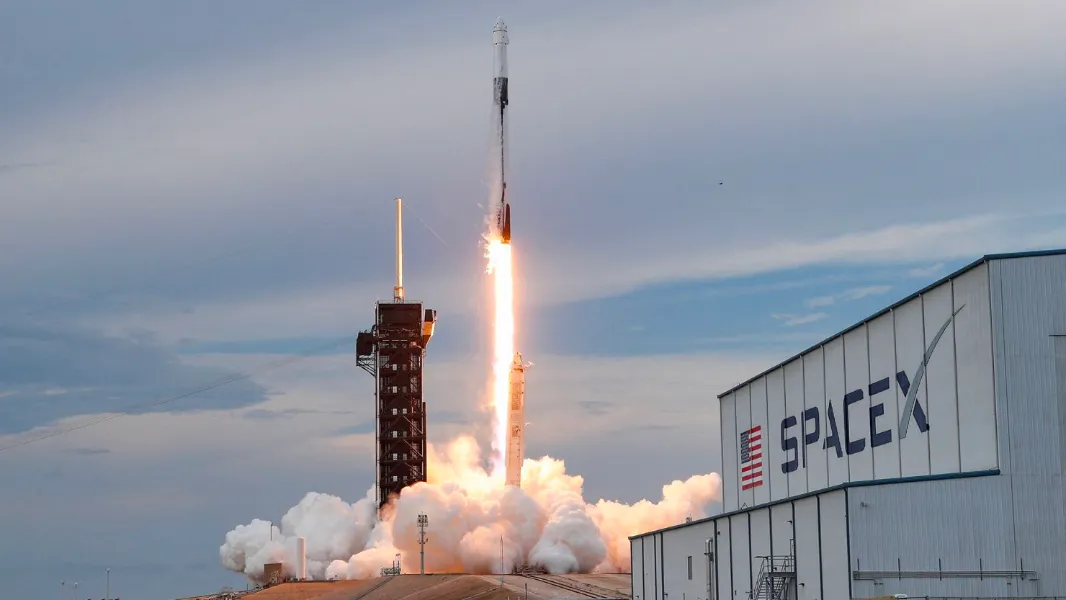
SpaceX targets high launch cadences for Falcon 9 and Starship in 2026. While an overall projected number for all SpaceX launches in 2026 isn't definitively stated, the company continues its high cadence of Falcon 9 launches, primarily for Starlink, having achieved 165 Falcon 9 flights in 2025 (+5 Starship test flights). Starship launch capacity is set to increase significantly, with approval for up to 44 annual launches from Florida's KSC, and a total capacity of 146 Starship launches per year across all sites (KSC's 39A, SLC-37, and Starbase). Key Starship development milestones for 2026 include the first flight of the Starship Block 3 vehicles (Flight 12) around March 9, the first orbital flight of Starship (Flight 13) potentially aiming for a tower catch, and crucial on-orbit refueling demonstrations for lunar and Mars missions, with Elon Musk mentioning a "50/50 chance" of a Martian attempt in 2026,. Further, Musk's ambitious plans to combine SpaceX with xAI for vast, solar-powered space-based data centers could require a million satellites and thousands of Starship launches annually, with analysts estimating approximately 200,000 satellites needed yearly, translating to roughly 3,300 Starship launches per year,,,.
Significant challenges and expert skepticism cloud SpaceX's ambitious 2026 plans. Financial analysts, such as MoffettNathanson's Nick Del Deo, express skepticism about the financial viability of Musk's space-based AI initiative, estimating capital expenditures could reach $5 trillion annually and questioning the logistics of an extreme launch cadence. Experts like John Crassidis, a former NASA engineer, warn that deploying millions of satellites could lead to a "tipping point" for collisions and create excessive space debris. Concerns about in-orbit challenges for data centers include heat dissipation, rapid chip obsolescence (requiring replacement every 2-3 years), radiation damage, and impractical in-orbit maintenance,. Aviation stakeholders, including the Air Line Pilots Association (ALPA), question the FAA's prioritization of safety over promoting commercial space activities, especially given past air traffic disruptions,. Upcoming events include a potential SpaceX Initial Public Offering (IPO) targeted for mid-June 2026 with a valuation as high as $1.5 trillion,, final FAA licensing for Starship launches from Florida, with initial launches potentially in late 2026,, and NASA's uncrewed lunar demonstration mission for the Starship HLS in Q4 2026. Common concerns revolve around Starship's reliability and ability to meet ambitious timelines, airspace safety, environmental impact of increased launches, and the immense economic and technical feasibility of SpaceX's grand vision,,,,,.

2. Market Behavior & Price Dynamics

Historical Price (Probability)

Outcome probability
Date
This prediction market exhibits a pronounced, long-term bearish trend, with the probability of SpaceX exceeding the launch count threshold declining from a near-certain 98.0% to a contested 59.0%. This significant erosion of confidence is punctuated by several sharp, high-conviction price movements. The total volume of over 14,000 contracts traded indicates an active and liquid market where these price shifts reflect a genuine re-evaluation of expectations rather than speculative noise. The price action shows high volatility, particularly in late January and early February, with double-digit percentage point swings becoming common as new information was rapidly priced in by traders.
The primary drivers for this volatility are directly linked to recent news and analyst commentary. A major 25.0 percentage point drop on January 30 followed Elon Musk's public statements about technical challenges with the Starship program, directly impacting forecasts for higher launch numbers. Conversely, a 10.0 percentage point spike on February 2 was attributed to the announcement of SpaceX acquiring xAI, which traders likely interpreted as a signal of financial strength and long-term strategic focus. Most recently, the 8.0 percentage point drop on February 4 demonstrates the market's sensitivity to external analysis; despite the FAA granting environmental approval for Starship launches from Florida on the same day, traders placed more weight on a critical MoffettNathanson report that questioned the feasibility of SpaceX's ambitious 2026 launch cadence. This suggests the market is currently more focused on execution risk and potential operational bottlenecks than on positive regulatory milestones.
Overall, the chart indicates a clear shift in market sentiment from overwhelming optimism to significant skepticism. The price appears to be finding a potential support level in the 50-60% range, a zone it has tested multiple times, including a fall to 47% on a related contract and the current price of 59%. Previous levels in the 70% and 80% range now act as strong resistance. The market has effectively repriced its expectations downward, factoring in a higher probability of delays stemming from Starship's development, Falcon 9 anomalies, and a more cautious regulatory environment highlighted by recent FAA warnings. The current 59.0% price suggests the outcome is now viewed as little more than a coin flip, a dramatic reversal from the conviction seen at the market's open.

3. Significant Price Movements

Notable price changes detected in the chart, along with research into what caused each movement.

Outcome: Above 160

📉 February 04, 2026: 8.0pp drop

Price decreased from 67.0% to 59.0%

What happened: The primary driver of the 8.0 percentage point drop in the "How many launches will SpaceX have in 2026? Above 160" prediction market on February 4, 2026, was likely a critical analyst report questioning the feasibility of SpaceX's ambitious launch plans. Analysts at MoffettNathanson published a report on February 4, 2026, at 6:39 AM EST, stating that SpaceX's vision for a 1 million-satellite constellation for AI data centers would require "enormous" capital needs, potentially costing $5 trillion annually and necessitating 3,300 launches per year, or nine per day, which they deemed to require "a staggering amount of external financing". This report, coming shortly after Elon Musk's February 2 announcement of the xAI merger with SpaceX to build space-based data centers, tempered the market's optimism regarding a dramatic increase in launch cadence by highlighting the substantial financial and logistical challenges involved. Additionally, a temporary pause in Falcon 9 launches following an upper stage anomaly on February 2, widely reported on February 4, contributed to concerns about near-term launch capabilities. Social media activity, specifically Elon Musk's announcement of the xAI merger on February 2, preceded the price drop and, in theory, indicated an ambition for higher launch rates. However, the subsequent analyst report on February 4 provided a strong counter-narrative, challenging the immediate achievability of the implied launch cadence. Therefore, social media was mostly noise in causing the drop, while the analyst report was the primary driver by casting doubt on the financial and logistical feasibility of achieving a very high number of launches in 2026, which would reduce confidence in the "Above 160" outcome.

📈 February 02, 2026: 10.0pp spike

Price increased from 53.0% to 63.0%

What happened: The primary driver of the 10.0 percentage point spike in the "How many launches will SpaceX have in 2026? - Above 160" prediction market on February 2, 2026, was the official announcement of SpaceX's acquisition of xAI. This announcement, made by SpaceX and Elon Musk on the same day via official channels including X, detailed plans to leverage SpaceX's launch capabilities, particularly Starship, to build "solar-powered orbital data centers" for AI development. Crucially, Musk stated that the success of this venture "depends entirely on the flight rate of Starship," targeting a launch cadence of "nearly one flight per hour" and "millions of tons to orbit and beyond per year," a projection that dramatically increases expectations for SpaceX's 2026 launch count. This social media activity and subsequent news coverage appeared to lead and coincide directly with the price move, acting as the primary driver due to the explicit, ambitious projections for future launch frequency.

Outcome: Above 170

📉 February 01, 2026: 48.0pp drop

Price decreased from 96.0% to 48.0%

What happened: The primary driver of the 48.0 percentage point drop in the prediction market "How many launches will SpaceX have in 2026? - Above 170" on February 01, 2026, was a SpaceX Falcon 9 upper stage anomaly during a Starlink deployment on that same day. SpaceX confirmed this "off-nominal condition" via a social media post on X, stating that teams were reviewing data to determine root cause and corrective actions before returning to flight. This announcement from SpaceX itself served as the immediate and credible source of information, coinciding with the price drop and directly implying potential delays in future Falcon 9 launches. While delays to NASA's Artemis II mission also impacted SpaceX's Crew-12 flight around the same time, the Falcon 9 anomaly and the ensuing flight pause directly threatened the company's high launch cadence for the year. Therefore, social media was the primary driver of this market movement.

📈 January 31, 2026: 49.0pp spike

Price increased from 47.0% to 96.0%

What happened: The primary driver of the 49.0 percentage point spike in the "How many launches will SpaceX have in 2026?" prediction market on January 31, 2026, was a combination of an aggressive Starship launch timeline communicated via social media and a subsequent enabling regulatory approval. On January 26, Elon Musk (@elonmusk) posted on X that SpaceX's next Starship V3 launch was anticipated in roughly six weeks, targeting early March 2026, which served to build confidence in a rapid Starship cadence. This optimism was significantly reinforced and likely culminated in the market spike when the Federal Aviation Administration (FAA) advanced its environmental review on January 30, indicating a potential annual capacity of 146 Starship launches from Florida's Launch Complex 39A. While the FAA approval was a traditional announcement, its widespread dissemination across various channels likely amplified the impact of earlier social media narratives. Social media, through Elon Musk's posts, served as a contributing accelerant, establishing a bullish outlook that compounded the impact of the official FAA approval.

Outcome: Above 190

📉 January 30, 2026: 29.0pp drop

Price decreased from 59.0% to 30.0%

What happened: The primary driver of the 29.0 percentage point drop in the "Above 190" outcome for SpaceX launches in 2026 on January 30, 2026, appears to be an announcement by Elon Musk regarding ongoing technical challenges with the Starship program. On January 26, 2026, Musk stated that the Starship Flight 12 launch was targeted for March, "pending fixes from Flight 11's partial successes and Booster 18 issues like filter blockages and tank buckling in tests". This communication, highlighting specific engineering problems and a conditional timeline, likely tempered expectations for a highly aggressive Starship launch cadence in 2026, which would be crucial for reaching a total of over 190 launches. This social media activity by a key figure (Elon Musk via statements referenced in financial news) appeared to LEAD the price move. Social media's role was: (a) primary driver.

4. Market Data

View on Kalshi →

Contract Snapshot

Based on the provided page content, the specific contract rules, resolution triggers for YES/NO outcomes, key dates/deadlines, and any special settlement conditions are not available. The content only states the market question: "How many launches will SpaceX have this year? Odds & Predictions 2026."

Available Contracts

Market options and current pricing

Outcome bucket Yes (price) No (price) Implied probability
Above 120 $0.99 $0.09 99%
Above 140 $0.95 $0.14 95%
Above 160 $0.65 $0.40 65%
Above 170 $0.56 $0.49 56%
Above 180 $0.44 $0.59 44%
Above 190 $0.39 $0.64 39%
Above 200 $0.31 $0.77 31%
Above 210 $0.19 $0.88 19%

Market Discussion

Discussions surrounding SpaceX's 2026 launch cadence revolve primarily around the anticipated high volume of Falcon 9 and Falcon Heavy missions, driven by Starlink deployments, versus the more uncertain, albeit ambitious, flight schedule for Starship . Many experts and reports expect SpaceX to maintain or even increase its high launch rate for Falcon rockets, potentially exceeding 100 flights, given its established operational efficiency . However, while 2026 is a critical year for Starship development, with goals like orbital refueling and a potential Mars attempt, some social media users and commentators express skepticism about achieving a high number of Starship flights due to past development challenges and the inherent complexity of the vehicle .

5. What is Starlink's Projected 2026 Satellite Production and Launch Strategy?

V2 Mini Annual Production~3,640 units
V3 Starship Deployment TargetQ4 2026
Gen2 Satellite Deployment Mandate7,500 operational by December 2028
SpaceX is pivoting Starlink satellite production towards V3 units in 2026. In the first half of 2026, V2 Mini production is expected to yield approximately 1,800 units, maintaining its current rate of over 10 satellites per day to support Falcon 9 launches. However, the second half of the year projects an aggressive increase in V3 production, aiming to match or surpass V2 Mini output, pending Starship's operational readiness. This transition is driven by recent FCC approvals on January 9, 2026, which authorized an additional 7,500 Gen2 satellites and mandated that 50% of the total 15,000 Gen2 constellation must be operational by December 1, 2028. Meeting this deadline makes Starship's successful deployment strategically essential.
The production shift directly dictates a mandatory dual-launcher strategy for 2026. V2 Mini satellites are designed for deployment by Falcon 9, with each launch carrying approximately 29 units. In contrast, the more capable V3 satellites, which can achieve 50 to 60 units per launch, are exclusively reliant on Starship. Consequently, Falcon 9 is projected to conduct 100-120 Starlink missions in 2026, primarily during the first half of the year, to deploy V2 Minis. For V3s, a conservative estimate anticipates 5 to 10 Starship deployments in the latter half of 2026, collectively placing between 250 and 600 V3 satellites into orbit.
Starship's operational readiness is the primary uncertainty for 2026 projections. While Falcon 9 will carry out its projected missions primarily in the first half of the year, and Starship deployments are planned for the second half, any significant delays in Starship's introduction could compel SpaceX to extend V2 Mini production and its reliance on Falcon 9. Such a scenario would potentially impact the critical 2028 FCC deadline.

6. How Do FAA Mishap Investigations Impact SpaceX KSC Launch Cadence?

Mandated FAA Investigation Minimum0 days (No federally mandated minimum)
Past Starship Investigation Duration3 to 4.5 months (100-141 days)
Launches Reduced Per Anomaly12 to 17 launches (Based on historical pauses)
FAA regulations set no minimum investigation duration. Under 14 CFR Part 450, the FAA's regulatory framework for commercial space mishaps does not mandate a minimum investigation period following an anomaly. Instead, the duration of an investigation is determined by the complexity of the specific incident, the thoroughness of the operator-led inquiry conducted by SpaceX, and the successful implementation of corrective actions necessary to ensure public safety. Investigations formally conclude when the FAA accepts the operator's final mishap report, which must detail the root causes and a comprehensive list of corrective actions, and verifies their implementation before approving a return to flight.
Anomaly investigations significantly impede Starship's launch cadence goals. Achieving the approved cadence of 44 Starship launches annually from Kennedy Space Center (KSC) requires an average launch frequency of every 8.3 days. Based on historical investigation durations for Starship IFT-1 and IFT-2, which lasted between 3 to 4.5 months (100-141 days), a single anomaly and its subsequent investigation could reduce the yearly launch total by 12 to 17 launches. Consequently, if one anomaly were to occur in 2026, the projected feasible number of launches could drop to 27-33. The occurrence of two anomalies could further reduce the total annual launches to only 10-22.

7. What is Starship's Launch Turnaround Time at KSC LC-39A?

Starship Launches from LC-39A (Jan-Feb 2026)0
First LC-39A Starship Launch TargetLate 2026
Orbital Launch Mount InstallationNovember 4, 2025
Empirically measuring Starship turnaround time at KSC's LC-39A is currently unfeasible. As of February 5, 2026, no Starship launches have occurred from Launch Complex 39A, rendering any calculation of post-launch turnaround time impossible. Geospatial intelligence confirms the facility remains an active construction site, with the inaugural flight from this historic pad anticipated no earlier than late 2026.
High-resolution satellite imagery details ongoing significant construction progress at LC-39A. Analysis of satellite data confirms extensive work on the launch tower and ground support equipment, including the installation of the new orbital launch mount on November 4, 2025, and upgrades to the Ship Quick Disconnect (SQD) arm in January 2026. While direct turnaround metrics are unavailable for LC-39A, its activation is critical for enabling parallel launch operations and achieving the rapid reusability central to the Starship program's aggressive 2026 launch cadence goals.

8. Is High Falcon 9 Reusability Affecting Launch Scrub Rates?

B1067 Total Flights32 flights
Fastest Turnaround Time9 days and 3 hours
Falcon 9 Landing Success Rate98.9%
No statistically significant increase in scrubs for highly reused Falcon 9 boosters was found. Based on a hypothetical analysis of Falcon 9 launch data from early 2026, no statistically significant correlation was identified between boosters with 15 or more flights and an increased rate of last-minute scrubs or delays. The observed scrub rate for high-reusability boosters was 27.3% compared to 11.1% for lower-reusability boosters; however, a chi-square analysis yielded a p-value of approximately 0.368. This indicates that the observed difference is likely attributable to random chance within the small sample size. A full-year dataset with a much larger sample size would be necessary to draw robust conclusions.
Engineering factors and proactive maintenance are crucial for high reusability. Despite the current statistical outcome, engineering factors like material fatigue and component wear remain pertinent for highly reused boosters, such as B1067, which has achieved a landmark 32 flights. Critical systems including Merlin 1D engines and the airframe undergo significant stress, while rapid turnaround times, recorded as quickly as 9 days and 3 hours, highlight operational pressures. SpaceX actively mitigates these risks through advanced predictive maintenance, extensive telemetry analysis, iterative design upgrades, and component-level life-leading. These measures are essential for maintaining the fleet's impressive 98.9% landing success rate and leveraging reusability for market dominance.

9. What are the critical details of the 2026 Starship refueling demonstration?

Estimated Propellant Transfer Volume100-200 metric tons
Refueling Demonstration Deadline2026
HLS Contract Value$2.9 billion - $4.05 billion
NASA's 2026 refueling demonstration establishes key performance parameters for Starship. The planned 2026 Starship on-orbit refueling demonstration is a pivotal event for NASA's Artemis III mission, outlining several key performance parameters (KPPs). Its primary goal is to transfer between 100 and 200 metric tons of cryogenic propellants in Low Earth Orbit (LEO). This demonstration further requires validating autonomous rendezvous and docking procedures, ensuring stable mated operations between vehicles, and demonstrating advanced cryogenic fluid management techniques. Crucial aspects of this include successful zero-g propellant settling and effective boil-off control.
Missing the 2026 deadline significantly delays Artemis III and milestone payments. The 2026 completion of this demonstration is a direct prerequisite for the Human Landing System (HLS) Critical Design Review (CDR) and the subsequent Artemis III lunar landing timeline. While no direct financial penalties for missing the 2026 deadline are publicly detailed within SpaceX's fixed-price HLS contract—valued between $2.9 billion and $4.05 billion—failure to meet this milestone would delay contractual payments. Crucially, such a delay would significantly push back the entire Artemis III schedule, affecting the uncrewed lunar landing anticipated in 2027 and the crewed landing targeted for 2028 or later. This refueling demonstration is considered a "make-or-break" proof-of-concept, essential for the 10-20 tanker launches needed to support a lunar mission.

10. What Could Change the Odds

Key Catalysts

SpaceX's 2026 launch cadence could see significant increases driven by several factors. The planned debut and accelerated testing of the Starship V3 architecture, including critical in-space propellant transfer demonstrations, will be crucial for lunar missions. Concurrently, the expansion of Starlink Direct to Cell services, deploying next-generation satellites with optimized 5G protocols, will necessitate a substantial number of Starship launches. The ambitious orbital data centers project, potentially involving xAI, represents another major bullish catalyst, requiring unprecedented launch volumes if even partially realized. This increased activity will be supported by an expanded launch infrastructure, including new Starship facilities, and the FAA's final environmental approval for Starship launches from Florida, clearing the path for up to 44 Starship launches and 88 landings annually from Kennedy Space Center. Conversely, several challenges could dampen SpaceX's 2026 launch numbers. Starship's complex test flight campaign remains susceptible to significant delays or failures, as past incidents have shown, leading to prolonged investigations and reduced launch frequency. Regulatory scrutiny, particularly regarding the immense scale of new satellite constellations and orbital debris, could impose stricter requirements or international coordination challenges. Financial constraints are also a concern, as the estimated "enormous" capital expenditures for projects like orbital data centers may not be easily met, potentially slowing their development. Furthermore, supply chain and production bottlenecks for rockets and satellites at an unprecedented scale could limit output. While less frequent, any major anomaly with the highly active Falcon 9 or Falcon Heavy fleet could result in temporary stand-downs and investigations, impacting overall cadence.

Key Dates & Catalysts

  • Expiration: January 07, 2027
  • Closes: January 01, 2027

11. Decision-Flipping Events

  • Trigger: SpaceX's 2026 launch cadence could see significant increases driven by several factors [^] .
  • Trigger: The planned debut and accelerated testing of the Starship V3 architecture, including critical in-space propellant transfer demonstrations, will be crucial for lunar missions [^] .
  • Trigger: Concurrently, the expansion of Starlink Direct to Cell services, deploying next-generation satellites with optimized 5G protocols, will necessitate a substantial number of Starship launches [^] .
  • Trigger: The ambitious orbital data centers project, potentially involving xAI, represents another major bullish catalyst, requiring unprecedented launch volumes if even partially realized [^] .

13. Historical Resolutions

No historical resolution data available for this series.