Short Answer

Both the model and the market expect SpaceX to have above 120 launches in 2026, with no compelling evidence of mispricing.

1. Executive Verdict

  • SpaceX targets over 200 launches in 2026, building on 2025 cadence.
  • Starship V3 architecture debuts early March 2026 with Flight 12.
  • Starlink production bottlenecks current SpaceX launch cadence.
  • FAA regulations lack fixed stand-down periods after launch anomalies.
  • Priority missions significantly constrain SpaceX's 2026 launch schedule.

Who Wins and Why

Outcome Market Model Why
Above 160 61% 58% Sustained Falcon 9 operations and initial Starship launch contributions support this volume.
Above 190 41% 37.5% Significant Starship operational capability would be required to achieve this ambitious launch pace.
Above 200 26% 23% Achieving 200 launches requires a highly successful Starship operational ramp-up by 2026.
Above 170 54% 51% Continued operational efficiency gains and consistent Starlink deployment support higher numbers.
Above 120 96% 99.1% SpaceX's rapidly increasing launch cadence makes 120 launches a highly achievable target.

Current Context

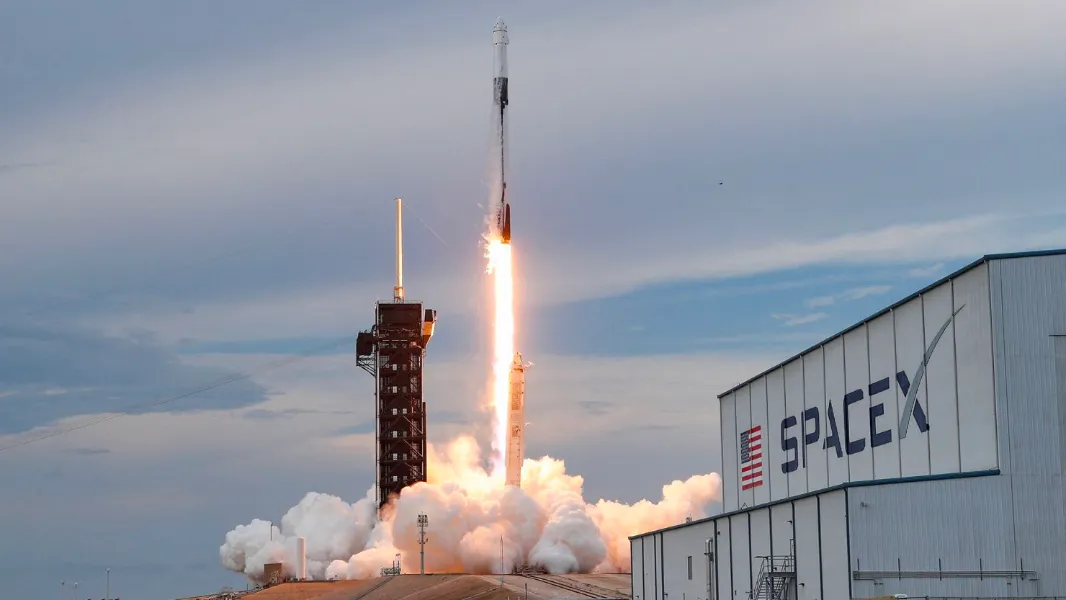
SpaceX anticipates a significant increase in launch cadence for 2026. Recent developments indicate an ambitious flight schedule across both Falcon rockets and Starship, with total launch projections ranging from "over 200 launches this year alone" to "between 180–200 launches" [^] following 165 flights in 2025 [^]. In February 2026, NASA and SpaceX were in final preparations for the Crew-12 mission to the International Space Station [^], alongside multiple Falcon 9 Starlink missions scheduled throughout the month from both California and Florida [^]. Notably, the FAA granted SpaceX approval for Starship launches from Kennedy Space Center's Launch Complex 39A on February 7, 2026, which is expected to facilitate a shift of some Falcon 9 efforts to Starship [^]. However, a Falcon 9 upper stage experienced an uncontrolled reentry on February 2, 2026, after failing its deorbit burn during a Starlink mission [^]. Elon Musk also announced a shift in near-term priority from Mars settlement to building a "self-growing city on the Moon" as of February 10, 2026, revising human Mars landing timelines to possibly 2029, though 2031 is considered more likely [^].
Starship and Falcon operations drive ambitious 2026 launch targets. The 12th Starship flight test, targeted for early March 2026 (originally January) and marking the first launch of Block 3 vehicles, leads to expert anticipation of approximately eight Starship flights in 2026, focusing on perfecting core capabilities and orbital refueling demonstrations [^]. Over ten Falcon launches are anticipated for February 2026 alone, with Falcon 9 remaining the primary workhorse and plans to launch 90 rockets from Vandenberg Space Force Base by 2026 [^]. Analysts highlight SpaceX's continued dominance, describing its growth as a "seismic shift" towards industrialized space travel, supported by Falcon's high reusability and loosening FAA restrictions [^]. Starship is increasingly viewed as the "primary engine for orbital infrastructure density," critical for deploying Starlink v3 satellites at reduced costs [^]. Some analyses even portray SpaceX in 2026 as having "mutated into a horizontal and vertical super-conglomerate" bridging telecommunications, defense infrastructure, and artificial intelligence compute power [^].
Upcoming events and persistent concerns shape SpaceX's 2026 outlook. Key upcoming activities include multiple Starlink missions and the Crew-12 launch in February [^], with four Starship missions anticipated in the first half of 2026 and another four for orbital refueling demonstrations in the second half [^]. Mid-2026 expects Starship Version 3 to demonstrate orbital capability and in-flight refueling, critical for NASA's Artemis lunar landing missions [^]. Speculation also continues regarding a potential SpaceX Initial Public Offering (IPO) in late 2026, with analysts weighing valuations between $800 billion to $1.5 trillion [^]. Environmental groups express concerns over increased launch frequency from Vandenberg, citing noise, sonic booms, and potential harm to marine life [^]. Questions also persist about Starship's ambitious development timeline, achieving consistent reusability, in-orbit refueling, and reliability of new Block versions following test flight anomalies and delays [^]. Regulatory oversight from the FAA remains a discussion point, balancing rapid innovation with safety. While SpaceX maintains dominance, new competitors like Blue Origin's New Glenn and Rocket Lab's Neutron are expected to make their maiden orbital flights in 2026, introducing a growing competitive factor [^]. Concerns regarding the immense concentration of "communication power" in a single company and its potential geopolitical implications have also been raised [^].

2. Market Behavior & Price Dynamics

Historical Price (Probability)

Outcome probability
Date
This prediction market has experienced a significant downward trend, with the probability of the "YES" outcome falling from a confident 90.0% at inception to its current price of 60.0%. This long-term decline indicates a sustained recalibration of expectations by traders, moving from high initial optimism to a more cautious stance. The market has been highly volatile in recent weeks, reacting sharply to new information. This is exemplified by the 10.0 percentage point spike on February 2, driven by optimistic news reports of an unprecedented launch cadence. However, this bullish sentiment was short-lived, as the market dropped 8.0 percentage points just two days later on February 4, following news of a Falcon 9 upper stage anomaly and a subsequent four-day grounding of the fleet by the FAA. These movements show a market that is acutely sensitive to both positive operational forecasts and the tangible risks of technical failures and regulatory actions.
The total trading volume of 12,737 contracts suggests an active and engaged market, where major price swings are backed by significant conviction from participants. Key price levels have begun to form. The market has found recent support in the low 50-cent range, demonstrated by the sharp rebound on February 2 from 53.0%. The current price of 60.0% appears to be a consolidation point after the recent volatility, serving as a new psychological level for traders. Overall, the chart indicates that while market sentiment has turned broadly bearish since the market opened, it remains cautiously optimistic that the "YES" outcome will resolve true. The 60.0% probability suggests traders believe the outcome is more likely than not, but the significant decline from 90.0% shows a clear acknowledgment of the operational and regulatory hurdles that could prevent SpaceX from meeting its most ambitious launch targets for 2026.

3. Significant Price Movements

Notable price changes detected in the chart, along with research into what caused each movement.

Outcome: Above 160

📉 February 04, 2026: 8.0pp drop

Price decreased from 67.0% to 59.0%

What happened: The primary driver of the 8.0 percentage point drop in the "Above 160" outcome for SpaceX launches in 2026 on February 04, 2026, was a Falcon 9 upper stage anomaly and the subsequent four-day grounding of the Falcon 9 fleet by the Federal Aviation Administration (FAA) [^]. News of a Falcon 9 upper stage anomaly following a Starlink deployment was reported on February 1, 2026, leading to the FAA grounding which was cleared on February 6, 2026 [^]. This direct disruption to SpaceX's primary launch vehicle coincided with and immediately preceded the market movement, raising concerns about their ability to maintain a high launch cadence [^]. Social media activity from key figures around this specific date was not identified as the primary driver; however, news about SpaceX shifting Dragon launches from Launch Complex 39A (LC-39A) to Space Launch Complex 40 (SLC-40) on February 4, 2026, to prepare LC-39A for Starship operations, could have contributed to a perception of short-term disruption [^]. While Elon Musk later posted on X about shifting focus to the Moon on February 9, 2026, this occurred after the price drop and thus was not the primary catalyst for this particular movement [^]. In conclusion, social media was mostly noise or irrelevant in driving this specific price movement, with traditional news and announcements regarding the Falcon 9 anomaly being the primary driver [^].

📈 February 02, 2026: 10.0pp spike

Price increased from 53.0% to 63.0%

What happened: The 10.0 percentage point spike in the prediction market for "SpaceX launches above 160 in 2026" on February 02, 2026, was primarily driven by highly optimistic traditional news reports detailing an unprecedented launch cadence for February [^]. A February 1, 2026, article highlighted February as a "Banner Month for Space Exploration" with "historic launches on the horizon," specifically detailing multiple SpaceX Falcon 9 launches throughout the month, starting on February 2nd, and projecting "over a dozen liftoffs" for February alone [^]. This aggressive immediate schedule, following SpaceX's record 165 launches in 2025, likely led market participants to significantly increase their expectations for SpaceX's total 2026 launch count [^]. While a Falcon 9 upper stage anomaly also occurred on February 2, resulting in a temporary FAA grounding, the market's positive spike indicates that the immediate, highly favorable launch forecast was the dominant factor, preceding or coinciding with the price move, rather than any direct social media activity [^].

Outcome: Above 170

📉 February 01, 2026: 48.0pp drop

Price decreased from 96.0% to 48.0%

What happened: The primary driver of the 48.0 percentage point drop in the prediction market on February 01, 2026, was most likely the news of delays to the NASA Artemis II mission, which directly affected the timeline for SpaceX's Crew-12 launch [^]. An "X Report" from February 1, 2026, indicated that "Cold weather delays Artemis 2 launch readiness, impacting ongoing missions" and that this "could significantly impact the timeline for the SpaceX Crew-12 mission" [^]. This traditional news, rapidly disseminated and captured in social media reports, likely led to a substantial re-evaluation of SpaceX's projected launch cadence for the year [^]. Social media was a contributing accelerant, amplifying the implications of the traditional news regarding these critical mission delays [^].

📈 January 31, 2026: 49.0pp spike

Price increased from 47.0% to 96.0%

What happened: The primary driver of the 49.0 percentage point spike in the "Above 170" outcome for SpaceX launches in 2026 on January 31, 2026, was likely a confluence of traditional news reports in early January that underscored SpaceX's accelerating launch cadence and expanded infrastructure [^]. Notably, a January 7, 2026 report stated that SpaceX had achieved a record-breaking 165 launches in 2025 and was "poised to further grow its offering" in 2026, explicitly setting a baseline just shy of the prediction market's threshold and signaling significant expansion [^]. This was further supported by ongoing news throughout January detailing rapid progress on Starship launch infrastructure at multiple sites and a continued high frequency of Falcon 9 missions, including the 13th launch of the month on January 30 [^]. While Elon Musk's broader aspirational statements about Starship production and future goals contribute to long-term market sentiment, no specific social media post directly preceding or coinciding with the spike explicitly projected "above 170" launches for 2026 [^].

Outcome: Above 190

📉 January 30, 2026: 29.0pp drop

Price decreased from 59.0% to 30.0%

What happened: The 29.0 percentage point drop in the "Above 190" outcome for SpaceX launches in 2026 on January 30, 2026, does not appear to have been primarily driven by a specific, high-credibility social media post or traditional news announcement explicitly lowering SpaceX's 2026 launch forecasts on or immediately before that date [^]. While some reports from early January expressed optimism for SpaceX's launch cadence in 2026, projecting increased output and dominance, there was no direct, influential communication signaling a significant reduction in anticipated launches [^]. Discussions regarding Starship Flight 12 delays emerged around January 31, 2026, and later, after the price movement, and focused on test flights rather than the overall Falcon 9 launch manifest which comprises the bulk of SpaceX's operations [^]. Instead, the price movement likely coincided with the conclusion of January's launch activities, with SpaceX completing its 13th and final launch of the month on January 30, 2026 [^]. An average of approximately 15.8 launches per month would be required to reach 190 launches in 2026 [^]. January's 13 launches, while a high cadence, fell short of this monthly average, potentially prompting market participants to re-evaluate the feasibility of exceeding 190 launches for the entire year [^]. Therefore, social media activity was mostly noise, and traditional news did not present a clear primary driver; the price drop was more likely a market re-evaluation based on the actual initial monthly launch data [^].

4. Market Data

View on Kalshi →

Contract Snapshot

The provided content is the market question: "How many launches will SpaceX have this year? Odds & Predictions 2026". It specifies the year 2026. However, the text does not include details on what exactly triggers a YES or NO resolution, specific deadlines, or any special settlement conditions for this market.

Available Contracts

Market options and current pricing

Outcome bucket Yes (price) No (price) Implied probability
Above 120 $0.96 $0.08 96%
Above 140 $0.96 $0.11 96%
Above 160 $0.61 $0.45 61%
Above 170 $0.54 $0.52 54%
Above 180 $0.45 $0.60 45%
Above 190 $0.41 $0.66 41%
Above 200 $0.26 $0.80 26%
Above 210 $0.17 $0.88 17%

Market Discussion

People are discussing and debating a wide range of predictions for SpaceX's 2026 launch count, generally falling into optimistic and more cautious camps [^]. Many foresee a significant increase, potentially surpassing 200 launches, driven by the continued high flight rate of Falcon 9 and the accelerating development and deployment of Starship for missions like Starlink V3 and lunar/Martian endeavors [^]. However, others express caution regarding the ambitious Starship ramp-up, citing potential bottlenecks in production, the need for successful in-orbit refueling demonstrations, and regulatory considerations, suggesting a more measured increase in overall launches or a slower Starship cadence [^]. Prediction markets reflect this divide, with a "200 or more" total launches having the highest odds, while "7-8" Starship orbital launches is the most favored outcome for that specific vehicle [^].

5. How Does the FAA Stand-down Protocol Affect SpaceX Launches?

Anomaly Event DateFebruary 2, 2026 [^]
FAA Investigation ClosureFebruary 6, 2026 [^]
Effective Stand-down DurationApproximately 4 days [^]
The FAA's regulatory framework does not impose fixed stand-down periods for launch anomalies. Instead, the framework, governed by 14 CFR Part 450, is event-driven, prioritizing a rigorous mishap investigation and verification of corrective actions to ensure public safety [^]. The Falcon 9 upper stage anomaly on February 2, 2026, involving an engine ignition failure during the Starlink 17-32 mission, initiated this process [^]. The actual duration of any operational pause is directly contingent upon the anomaly's complexity, the speed of root cause identification, and the time necessary to implement and verify corrective measures [^].
The February 2, 2026, anomaly resulted in a minimal four-day stand-down. The FAA swiftly closed its investigation into the February 2, 2026, incident on February 6, 2026, leading to this short operational pause [^]. This specific duration is consistent with historical Falcon 9 upper stage anomalies, which typically show operational pauses ranging from four days to two weeks [^]. Significantly, this rapid resolution caused no disruption to SpaceX's previously scheduled 2026 Starlink launches [^].
This swift return-to-flight reinforces confidence in SpaceX's operational tempo. The quick resolution highlights the maturity of the Falcon 9 system and the efficiency of the collaborative SpaceX-FAA investigative process [^]. Such minimal stand-downs negate any short-term negative adjustments in launch forecasts, supporting predictions for a high 2026 launch count, as the risk of prolonged operational pauses from minor Falcon 9 issues appears minimal [^].

6. How Many Starship Block 3 Launches Are Expected in 2026?

Starship Block 3 Processing Time4 to 6 weeks per vehicle stack [^]
Starbase Annual Launch Limit25 orbital launches per year [^]
2026 Starship Launch Forecast7 to 12 flights [^]
Starship ground processing typically requires 4 to 6 weeks for each vehicle. This timeline covers stacking, cryogenic proofing, and static fire campaigns [^]. Significant infrastructure improvements at Starbase, including the activation of a second orbital launch pad, are designed to enable parallel processing flows and reduce the overall launch-to-launch interval. While LC-39A received approval for up to 44 annual Starship launches in January 2026 [^], its operational contribution is anticipated to be minimal, ranging from zero to two flights, in late 2026, primarily to prepare for 2027 operations.
FAA regulations and potential mishaps significantly constrain Starship's launch cadence. The Federal Aviation Administration's Vehicle Operator License for Starbase currently permits a maximum of 25 orbital launches annually [^]. However, any flight anomaly or mishap would initiate an FAA-led investigation, which historically has an average Return-to-Flight (RTF) approval timeline of approximately 21 days [^]. This regulatory bottleneck, coupled with the inherent challenges of a new flight test program, leads to a more conservative projection for the 2026 launch schedule.
Realistic projections for 2026 indicate 7 to 10 Starship Block 3 launches. Considering both hardware readiness and regulatory factors, independent analyses project a range of 7 to 10 Starship Block 3 launches for 2026, with some conservative estimates extending this to 7 to 12 flights [^]. This base case scenario accounts for the likelihood of one to two mishaps that would incur FAA-mandated stand-downs and subsequent delays. The overall launch cadence will be primarily determined by the reliability and success rate of the initial Block 3 missions; successful flights will enable a faster ramp-up, while failures will introduce significant delays due to investigation requirements.

7. What is SpaceX's Theoretical Maximum Launch Capacity for 2026?

Maximum Capacity (3 Primary Pads)90 launches [^]
SpaceX 2026 Corporate Launch GoalOver 120 missions [^]
Required Falcon 9 Turnaround for 120+ TargetApproximately 6.4 days [^]
SpaceX's Florida pads project 90 theoretical launches for 2026. Based on detailed analysis of operational efficiency and pad allocation, SpaceX's maximum theoretical launch capacity from its three primary pads (SLC-40, SLC-4E, and LC-39A) for 2026 is projected to be 90 missions. This figure is derived from an assumed Falcon 9 turnaround time of 8.5 days. Specifically, SLC-40 and SLC-4E are each projected to support 42 Falcon 9 launches, while LC-39A is allocated six heavy-lift missions, comprising four Falcon Heavy and two Starship missions [^].
This 90-launch capacity falls short of SpaceX's 2026 target. The calculated 90-launch capacity falls short of SpaceX's stated corporate goal of over 120 missions in 2026 [^]. To bridge this gap purely from the three primary Florida pads, the Falcon 9 turnaround time at SLC-40 and SLC-4E would need to dramatically improve to a sustained average of approximately 6.4 days per launch.
Starbase Starship launches could help bridge the overall mission gap. A more plausible pathway to reach the 120+ mission target involves significant contributions from Starbase, Texas. Starbase has an FAA-assessed target of up to 25 Starship launches annually [^], potentially bringing the combined fleet capacity to around 115 launches.

8. Is Starlink Production Bottlenecking SpaceX's 2026 Launch Targets?

Current Weekly V2 Satellite Production70 V2 Mini Optimized satellites per week [^]
Monthly Satellite Demand for 15 F9 Launches435 satellites per month [^]
Estimated Monthly Production Post-Expansion~495 satellites per month (speculative projection based on facility expansion [^])
Starlink satellite production currently limits SpaceX's launch cadence. SpaceX's Redmond facility currently produces approximately 70 Starlink V2 Mini Optimized satellites per week, a rate confirmed in its 2025 Progress Report and continuing into early 2026 [^]. This production level translates to about 303 satellites monthly [^], which can only sustain 10-11 Falcon 9 launches per month [^]. This creates a significant deficit against the 2026 target of 15 or more launches per month, thereby making satellite production the primary bottleneck for launch operations [^].
SpaceX is expanding production, but future demand remains high. To address this constraint, SpaceX is undertaking a substantial manufacturing expansion in Washington state, including a new 270,000 sq. ft. campus in Woodinville [^]. While speculative projections suggest this expansion could increase production to around 114 satellites per week, or approximately 495 satellites per month, the potential introduction of Starship for satellite deployment complicates demand [^]. Starship launches would require full-size V2 satellites, significantly increasing the total monthly satellite demand to an estimated 537 for a mixed fleet scenario, potentially outpacing even the projected expanded production capacity [^].
Production throughput will likely dictate SpaceX's 2026 launch count. For the 2026 SpaceX launch prediction market, the central thesis posits that the total launch count will be determined by manufacturing throughput rather than launch vehicle readiness [^]. Achieving an average of 15 or more launches per month requires a sustained production rate exceeding 100 satellites per week early in 2026, which is considered a highly optimistic scenario [^]. If production remains near the current 70 per week rate for the first half of the year, or if the ramp-up is slow, achieving the annual target will be extremely challenging, thus supporting a bear case for the prediction market [^].

9. How Do SpaceX's Priority Missions Impact Starlink's 2026 Schedule?

Target Starlink satellites by 2026 end12,000 [^]
Starlink V3 mass deployment startProjected Q4 2026 [^]
Satellites in orbital reconfiguration4,400 [^]
High-priority missions impose significant constraints on SpaceX's 2026 manifest. The 2026 launch schedule is primarily driven by critical government and commercial payloads, including U.S. Space Force National Security Space Launch (NSSL) missions, NASA's Nancy Grace Roman Space Telescope, and large commercial geostationary (GEO) satellites [^]. These missions are subject to stringent launch-by deadlines and significant contractual penalties for delays, carrying high strategic value that can lead to substantial financial and national security consequences if issues arise [^].
Delays in anchor missions directly jeopardize Starlink's 2026 deployment targets. Any delays in these high-priority missions create a cascading backlog by competing for shared launch pads, reusable boosters, and personnel, which directly threatens Starlink's ambitious deployment goals for 2026. SpaceX aims to deploy 12,000 Starlink satellites in orbit by year-end and commence mass deployment of V3 satellites using Starship [^]. Such delays would worsen existing network capacity limitations, hinder revenue growth, and complicate the ongoing orbital reconfiguration of 4,400 satellites, which is crucial for enhanced space safety [^].
Starship's late 2026 debut for Starlink presents both opportunities and risks. The operational debut of Starship for Starlink deployment in late 2026 introduces a critical variable. While Starship’s massive payload capacity offers the potential to rapidly clear launch backlogs [^], its development program has faced prior setbacks, introducing new, high-stakes systemic risks into the launch ecosystem [^]. Should Starship’s readiness be delayed, especially if critical NASA Artemis-related test flights are prioritized, the transition to Starlink V3 and overall deployment could be severely impacted [^].

10. What Could Change the Odds

Key Catalysts for SpaceX Launch Probability in 2026

SpaceX is targeting over 200 launches in 2026, building on a high cadence of 165 Falcon 9 flights in 2025, with Falcon family launches already occurring every two days on average [^] . A significant driver for this ambition is the operationalization of Starship, with the Starship V3 architecture expected to debut in early March 2026 with Flight 12 [^]. The company is pursuing FAA approval for up to 25 Starship launches annually from Starbase and up to 44 from Launch Complex 39A in Florida, with infrastructure expansion underway at both sites to support a potential launch start at LC-39A in the second half of 2026 [^]. Key milestones include planned orbital refueling demonstrations around Flight 16 in mid-2026, alongside sustained demand from Starlink V3, direct-to-mobile satellite deployments, and critical government missions like NASA’s Artemis program [^].
Despite these ambitious plans, several bearish catalysts could impact SpaceX's 2026 launch count. Starship development continues to face risks of test flight failures or delays, as evidenced by 5 failures out of 11 launches by October 2025 and the delay of Flight 12 [^]. Regulatory hurdles also persist, with final FAA environmental, safety, and financial reviews still required for full operational licenses at both Starship launch sites [^]. While highly reliable, any Falcon 9/Heavy launch anomaly, such as the brief stand-down on February 2, 2026, could temporarily halt operations [^]. Furthermore, delays in critical infrastructure construction at Starbase and Florida, or unforeseen supply chain and production bottlenecks, could constrain the projected ramp-up in launch frequency [^].

Key Dates & Catalysts

  • Expiration: January 07, 2027
  • Closes: January 01, 2027

11. Decision-Flipping Events

  • Trigger: SpaceX is targeting over 200 launches in 2026, building on a high cadence of 165 Falcon 9 flights in 2025, with Falcon family launches already occurring every two days on average [^] .
  • Trigger: A significant driver for this ambition is the operationalization of Starship, with the Starship V3 architecture expected to debut in early March 2026 with Flight 12 [^] .
  • Trigger: The company is pursuing FAA approval for up to 25 Starship launches annually from Starbase and up to 44 from Launch Complex 39A in Florida, with infrastructure expansion underway at both sites to support a potential launch start at LC-39A in the second half of 2026 [^] .
  • Trigger: Key milestones include planned orbital refueling demonstrations around Flight 16 in mid-2026, alongside sustained demand from Starlink V3, direct-to-mobile satellite deployments, and critical government missions like NASA’s Artemis program [^] .

13. Historical Resolutions

Historical Resolutions: 40 markets in this series

Outcomes: 23 resolved YES, 17 resolved NO

Recent resolutions:

  • KXSPACEXCOUNT-26JAN-18: NO (Feb 01, 2026)
  • KXSPACEXCOUNT-26JAN-16: NO (Feb 01, 2026)
  • KXSPACEXCOUNT-26JAN-15: NO (Feb 01, 2026)
  • KXSPACEXCOUNT-26JAN-14: NO (Feb 01, 2026)
  • KXSPACEXCOUNT-26JAN-13: NO (Feb 01, 2026)