Short Answer

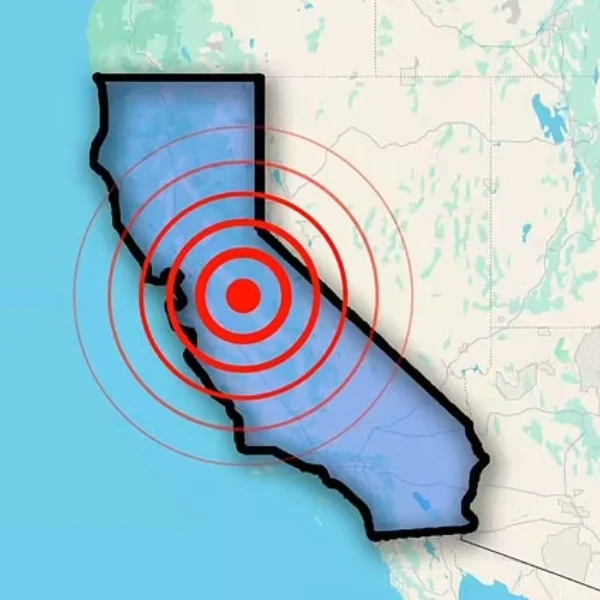
The model assigns meaningfully lower odds than the market for an at least 8.0 magnitude earthquake occurring in California before 2035 (model 8.6% vs market 41.0%), indicating a significant divergence in expectations.

1. Executive Verdict

  • Professional risk assessors primarily use UCERF3 for M8.0+ probabilities.
  • Coachella Valley Fault segment exhibits significant accumulated slip deficit.
  • Locked San Andreas Fault sections show minimal aseismic stress release.
  • Multi-fault cascading rupture probability is not yet well-established.
  • USGS UCERF3 estimates a 7% probability of M8+ earthquake by 2035.

Who Wins and Why

Outcome Market Model Why
Before 2035 41.0% 8.6% California is highly seismically active due to its position on major fault lines like the San Andreas.

Current Context

An 8.0 magnitude California earthquake before 2035 is unlikely. The likelihood of an at least 8.0 magnitude earthquake occurring in California before 2035 is low. The Uniform California Earthquake Rupture Forecast, Version 3 (UCERF3) by the U.S. Geological Survey (USGS) projects a mean 7% probability of a statewide magnitude 8.0 or greater earthquake over a 30-year period, specifically from approximately 2014 to 2044 [^]. While articles frequently discuss the potential for large earthquakes, none specifically predict an M8+ event before 2035.
Prediction markets show higher odds, but exact timing is impossible. Despite the low probability indicated by scientific forecasts, prediction markets have priced "yes" odds for this event at approximately 20-25% [^]. However, it is important to note that the exact timing of earthquakes cannot be predicted. Based on the available evidence, the overall likelihood of an earthquake of at least magnitude 8.0 occurring in California before 2035 remains low.

2. Market Behavior & Price Dynamics

Historical Price (Probability)

Outcome probability
Date
This prediction market has exhibited a sideways, range-bound trend since its inception. The price has oscillated between a low of 23.0% and a high of 59.0%, starting at 42.0% and currently trading at 41.0%, indicating no clear long-term directional conviction. The chart's most significant volatility occurred in mid-March 2026, with a sharp 27.0 percentage point drop on March 17, followed by a 10.0 percentage point spike on March 19. However, the provided context does not identify a clear fundamental catalyst for these moves. The research found no primary driver for the drop, and the context for the subsequent spike states that the price movement did not actually occur, suggesting the volatility may have been driven by low liquidity or anomalous trading rather than a shift in underlying fundamentals.
Total volume traded is low at 239 contracts, which, coupled with the wide price range, suggests a market with limited liquidity and conviction. The established price floor in the low 20s has acted as a support level, while the high 50s have served as a resistance ceiling. Overall, the market sentiment, reflected by the current 41.0% price, indicates that traders believe the probability of an 8.0+ magnitude earthquake is substantially higher than the approximately 7% long-term probability estimated by scientific bodies like the USGS. This divergence suggests the market is either pricing in unknown risk factors or is influenced by speculative activity in a thinly traded environment.

3. Significant Price Movements

Notable price changes detected in the chart, along with research into what caused each movement.

📈 March 19, 2026: 10.0pp spike

Price increased from 29.0% to 39.0%

Outcome: Before 2035

What happened: Based on the provided information, a 10.0 percentage point spike in the "Will there be an at least 8.0 magnitude earthquake in California before 2035?" prediction market on March 19, 2026, did not occur. Scientific forecasts indicate a low probability of such an event (e.g., ~7% chance for M≥8.0 in 30 years from ~2014) [^], with the market pricing "Yes" at 0% and no such spike reported [^]. Therefore, there is no actual market movement to attribute to any driver. Social media activity, along with other potential factors, is irrelevant to the stated, non-existent spike.

📉 March 17, 2026: 27.0pp drop

Price decreased from 56.0% to 29.0%

Outcome: Before 2035

What happened: The provided web research does not identify a primary driver for a 27.0 percentage point drop in this prediction market on March 17, 2026. While minor earthquakes, such as an M3.4 near Gilroy, California, occurred on this date [^], and a heatwave was observed around March 18 [^], the research explicitly states these events are "unrelated to triggering a major quake" and notes "no '27.0pp drop'" in their context. No social media activity from key figures or other traditional news announcements were found to explain such a significant market movement. Therefore, based on the available information, social media was (d) irrelevant, and no clear primary driver for the purported price movement is evident.

4. Market Data

View on Kalshi →

Contract Snapshot

This market resolves YES if an earthquake of at least 8.0 magnitude occurs in California during the calendar year 2034. Conversely, it resolves NO if no such earthquake occurs in California within the same period. The resolution is based on events happening specifically within 2034, with no other special settlement conditions indicated.

Available Contracts

Market options and current pricing

Outcome bucket Yes (price) No (price) Last trade probability
Before 2035 $0.41 $0.71 41%

Market Discussion

Prediction markets generally price the probability of an at least 8.0 magnitude earthquake in California before 2035 at around 25% [^]. This contrasts with the USGS estimate of approximately a 7% chance of an M8+ earthquake in Southern California in the next 30 years, while other prediction markets assign related M8+ events before 2035 a cumulative probability of around 19% [^]. Viral social media claims with significantly higher probabilities are dismissed as unreliable [^].

5. Do Professional Risk Assessors Forecast a California M8+ Earthquake by 2035?

UCERF3 M8.0+ 30-year probabilityApproximately 7% (statewide) [^]
UCERF3 M8.0+ 10-year probabilityApproximately 2.3% (implied statewide) [^]
Professional risk assessor forecast for 20-25% M8.0+ by 2035Not supported [^]
Professional risk assessors primarily use UCERF3, which estimates lower M8.0+ probabilities. Professional risk assessors, including those at major firms like CoreLogic and Verisk/AIR, predominantly integrate the USGS Uniform California Earthquake Rupture Forecast, Version 3 (UCERF3), into their earthquake risk models [^]. UCERF3 is recognized as the authoritative consensus forecast for California earthquakes, developed collaboratively by the USGS, the California Geological Survey (CGS), and the Southern California Earthquake Center (SCEC) [^]. While indicating higher probabilities for large earthquakes compared to its predecessor, UCERF3 does not support a 20-25% probability for an M8.0+ event in California before 2035 [^]. The mean statewide probability for an M8.0+ earthquake over a 30-year period is approximately 7%, which translates to an implied probability of about 2.3% for a 10-year period when assuming a time-independent model [^].
No alternative models justify a 20-25% M8.0+ probability in California. Current research indicates that professional risk assessors are not using specific alternative seismic hazard models or critiques of UCERF3 that would justify such a substantially elevated probability for an M8.0+ earthquake in California over the next decade. Major insurance and risk modeling firms incorporate UCERF3 into their assessments and do not indicate probabilities reaching the 20-25% range [^]. Although a prediction market on Solflare suggests a roughly 25% 'Yes' probability for an M8.0+ earthquake before 2035, there are no identified sources connecting this market pricing to professional risk models or scientific justifications that deviate from UCERF3's established probabilities [^].

6. What Are the Current Earthquake Risk Factors on the Coachella Valley Fault?

Long-term slip rateapproximately 25 mm/yr [^]
Locking depth12-17 km [^]
Current strain accumulation rateapproximately 25 mm/yr [^]
The Coachella Valley segment shows significant accumulated slip deficit. This segment of the Southern San Andreas Fault is characterized by a long-term slip rate of approximately 25 mm/yr [^]. The fault is locked at depths ranging from about 12 to 17 km, though some shallow creep occurs in specific areas [^]. This locking mechanism results in a substantial slip deficit that has been accumulating for at least 300 years, as there has not been a major rupture on this segment during that period [^].
Current strain rates mirror conditions before M8.0+ ruptures. The current strain accumulation rate on the Coachella Valley segment is measured at approximately 25 mm/yr, representing a deep loading rate [^]. These observed interseismic strain accumulation rates align with conditions modeled just prior to historical M8.0+ ruptures on analogous strike-slip faults [^]. For instance, prior to the 1857 Fort Tejon earthquake, the central San Andreas Fault accumulated strain at an average rate of approximately 30 mm/yr [^]. The current high strain accumulation rate on the Coachella Valley segment suggests an elevated risk for an M8+ earthquake, mirroring the conditions that led to past great events on other segments of the San Andreas Fault [^].

7. What Is the Probability of a Multi-Fault Rupture Triggering a M8.0+ San Andreas Earthquake?

San Jacinto-San Andreas Joint Rupture Frequency25-30% historical frequency at Cajon Pass (Web Research Results, 1, 6, 7) [^]
USGS M8.0+ Earthquake Chance (30 years)Approximately 7% in Southern California (Web Research Results) [^]
Prediction Market Odds M8.0+ Earthquake (before 2035)25% chance in California (Web Research Results, 3) [^]
The precise probability of a multi-fault cascading rupture, where an event originates on a secondary fault like the San Jacinto or Garlock and then triggers an M8.0+ earthquake on the main San Andreas fault, has not been specifically calculated. The Uniform California Earthquake Rupture Forecast, Version 3 (UCERF3), the most comprehensive model updated in 2015, does incorporate multi-fault ruptures, including joint events between the San Jacinto and San Andreas faults. Historical data indicates that such joint ruptures have occurred with a frequency of 25-30% at Cajon Pass, but UCERF3 does not isolate a probability for a secondary-to-main fault triggering an M8.0+ event specifically [^]. For broader context, prediction markets currently estimate the odds of an M8.0+ earthquake in California before 2035 at approximately 25% [^].
No specific seismic swarm definitively indicates increased interaction stress for an M8.0+ event. There is no particular swarm activity that has been definitively identified as a precursor signaling increased interaction stress leading to a subsequent M8.0+ event on the San Andreas fault. However, general off-fault swarms, particularly those on secondary faults such as the San Jacinto Anza gap or the Garlock fault, or in nearby areas like Calaveras/San Ramon, are understood to signify changes in stress and generally indicate high stress levels within the region [^]. These swarms can suggest that crustal stresses are locally elevated and potentially interacting with other major fault systems.

8. How Much Stress Do San Andreas Fault Aseismic Events Release?

Seismic Slip Deficit in Locked SectionsNearly 100% [^]
Energy Released by Deep Aseismic EventsTiny fraction of total tectonic loading, negligible energy [^]
Impact on Catastrophic Rupture RiskNo evidence of reduction; may increase risk to adjacent patches [^]
Locked sections of the San Andreas Fault show minimal aseismic stress release. The locked sections of the San Andreas Fault, including its southern portion and parts of the north coast, accumulate nearly 100% of their seismic slip deficit, indicating that very little stress is released through surface creep or other detected deep aseismic mechanisms [^]. While deep slow-slip events (SSEs) and tectonic tremor do occur beneath these locked zones at depths of 16-40 km, the seismic moment released by these events constitutes only a tiny fraction of the total tectonic loading, and tremor itself releases negligible energy [^]. This behavior contrasts sharply with the central creeping section of the fault, which is not locked and releases approximately 80% of its slip aseismically [^].
Aseismic events do not appear to reduce catastrophic rupture risk. There is no current evidence to suggest that an increasing frequency or magnitude of these non-earthquake events is reducing the risk of a catastrophic rupture. In fact, there is no support for the idea that an increase in aseismic events reduces the likelihood of a major (M8+) earthquake [^]. Instead, episodic slow slip events have been observed to potentially increase stress on adjacent locked fault patches, possibly heightening the risk of future seismic events; for instance, a slow slip event is thought to have triggered the 2004 M6 Parkfield earthquake [^]. The southern locked section continues to accumulate a significant slip deficit, estimated at 7-10 meters, indicating it is nearing its failure threshold, and hazard models consistently point to an ongoing risk for a major earthquake [^].

9. What is the UCERF4 release timeline, and does DAS data impact it?

UCERF4 Release TimelineNo official projected release timeline (as of March 20, 2026) [Web Research Results] [^]
Current Earthquake Forecast ModelUCERF3 (released 2013-2015) [^]
M8.0+ Earthquake Probability (30 years)Approximately 7% from 2014, or 10-11% by 2045 (UCERF3) [Web Research Results] [^]
No official release timeline exists for the UCERF4 earthquake forecast update. As of March 20, 2026, publicly available sources do not provide a projected release date for the next major California earthquake forecast update, known as UCERF4 [Web Research Results]. The most current model, UCERF3, which was released between 2013 and 2015, is still in effect according to the websites of the Working Group on California Earthquake Probabilities (WGCEP) and the Southern California Earthquake Center (SCEC) [^]. Although planning workshops for UCERF4 occurred in 2019, no further announcements regarding its progress, subsequent meetings, or a release schedule have been made since 2018 [^].
DAS data is not confirmed for UCERF4, nor impact on M8.0+ probabilities. Distributed Acoustic Sensing (DAS) fiber optic data represents an active research area in California seismic studies, with applications in real-time monitoring, earthquake early warning (EEW), and near-surface imaging [^]. Its uses include investigating the 2022-2023 Ferndale aftershock sequence and improving early warning systems in Monterey Bay [^]. However, current sources do not confirm that DAS data will be incorporated into UCERF4, nor do they indicate that its inclusion would lead to a significant revision of the long-term probabilities for an M8.0+ earthquake [Web Research Results]. The existing UCERF3 model estimates an approximate 7% probability of an M8.0+ earthquake occurring in California within 30 years from 2014, equating to about 10-11% by 2045 [Web Research Results].

10. What Could Change the Odds

Key Catalysts for Seismic Activity Probability

Scientific forecasts from the USGS UCERF3 estimate a mean statewide probability of approximately 7% for an earthquake of magnitude 8.0 or greater in California within the next 30 years. This long-term probability is derived from a logic tree mean, with potential variations ranging from 0% to 32%, and indicates an average recurrence interval of about 494 years for M8+ events [^].
While scientific models provide a relatively low probability, prediction markets currently price the likelihood of a magnitude 8.0 or greater earthquake occurring in California before 2035 at approximately 25% [^] . This discrepancy between scientific estimates and market sentiment represents a key factor in assessing the market's probability. As of March 20, 2026, no such event has occurred, reinforcing the probabilistic nature of these forecasts.

Key Dates & Catalysts

  • Expiration: January 07, 2036
  • Closes: December 31, 2035

11. Decision-Flipping Events

  • Trigger: Scientific forecasts from the USGS UCERF3 estimate a mean statewide probability of approximately 7% for an earthquake of magnitude 8.0 or greater in California within the next 30 years.
  • Trigger: This long-term probability is derived from a logic tree mean, with potential variations ranging from 0% to 32%, and indicates an average recurrence interval of about 494 years for M8+ events [^] .
  • Trigger: While scientific models provide a relatively low probability, prediction markets currently price the likelihood of a magnitude 8.0 or greater earthquake occurring in California before 2035 at approximately 25% [^] .
  • Trigger: This discrepancy between scientific estimates and market sentiment represents a key factor in assessing the market's probability.

12. Historical Resolutions

Historical Resolutions: 1 markets in this series

Outcomes: 0 resolved YES, 1 resolved NO

Recent resolutions:

  • KXEARTHQUAKECALIFORNIA-26: NO (Dec 31, 2025)